UX Design · Sound Design · NIO · 2020–2021
Building NIO's first systematic sound design framework — recategorizing cockpit sounds, defining a new sound style, updating the sound library, and creating a guideline that shaped NIO's sonic identity. Winner of the Design-Driven Award.
01
Drivers rely on sound feedback to take quick reactions. If sounds are not applied properly, users may get confused and fail to take the right action — which is especially dangerous in in-car scenarios. Some sounds in NIO's alert system did not match the right scenarios, because there was no systematic category or principle.
Learning from BMW, who invited Hans Zimmer to design sounds for acceleration and sports mode switching, great sound design provides emotional value. Google calls these "Hero Sounds."
When analyzing sound iterations across car brands, sounds in cars have become gentler and more human over the decades. This goes with the development of the car itself — a car is no longer just a machine but a safe and important space for people.
"Sound design pursues proper emotional impression as well as accurate interaction."
02
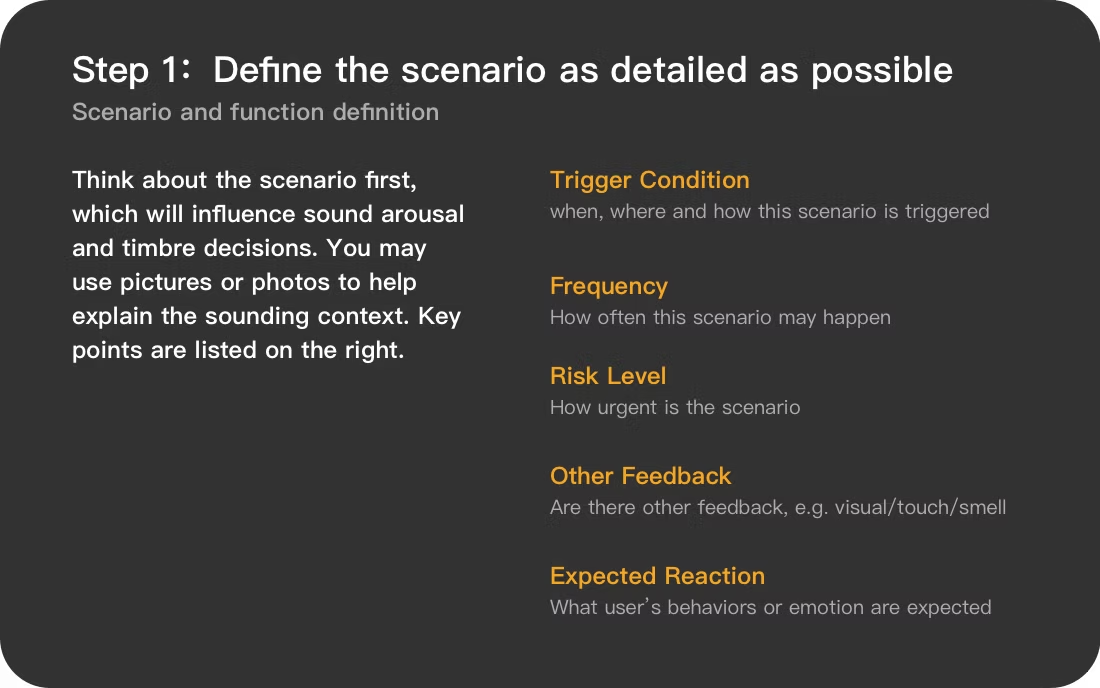
I created a comprehensive sound design guideline handbook to help different teams apply sounds properly and consistently across NIO's ecosystem.
To guarantee sound design quality
To keep the system consistent & clear
To highlight emotional experience
To shape NIO's sound identity
03
NIO has a strong design DNA. Sound design should follow the same principles. I specified requirements for sound design aligned with NIO's core values.
04
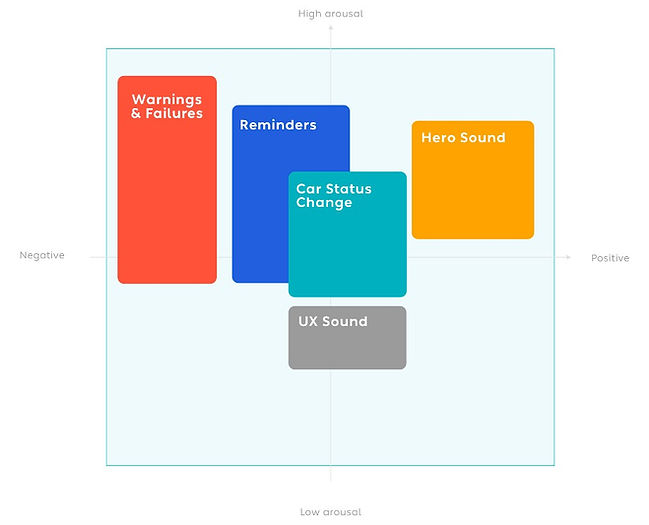
From negative to positive, sounds are typically brighter, using delightful timbre and harmonious music scales. From low arousal to high arousal, sounds are drier, using higher volume, pitching, and hastier rhythm. Warnings and reminders should be more universal while hero sounds and UX sounds can be personalized.
*Hero sounds are representations of a product and brand that highlight an important moment, evoke an emotional state, or express celebration. (Google)
05
Based on design principles, I worked with a sound designer and proposed three sound styles — each containing typical sounds from different categories. We invited colleagues to listen in-car and give feedback on how they felt about each style. Having analyzed the feedback, we chose one direction to go further.
Creates a sound experience that feels like the mystery of future technology, but not cold. Colors are mellow and full; delicate color changes give life temperature. Increased low-frequency fullness provides a stronger three-dimensional, wrapping feeling in the car.
Explores the enthusiasm of the younger generation. Percussion frequency as the foundation of sound design is full of dynamic and vitality. Sampler music with natural energy, combined with combined-note design, brings a passionate and free sound experience.
Creates a simple, modern sound experience. Colors are simple and neutral, straightforward with a sense of distance. Through restrained modification, the rigid feeling of minimalism is softened. Depth and priority of each sound can be flexibly defined and combined.
06
With the sound style decided, we worked on the complete sound set. We put sounds in-car and invited colleagues to test for identifiability and arousal level. Based on the feedback, we iterated the sound design.
07
With a clear sound category and several iterations on sound identity, we delivered a new sound set. The overall style was minimal, ensuring users' clear cognition and quick response, with more expressive sounds for Pilot to evoke a sense of technology and ritual. Each sound focused not only on its own quality, but also on the experience in real scenarios and its position in the overall sound system.